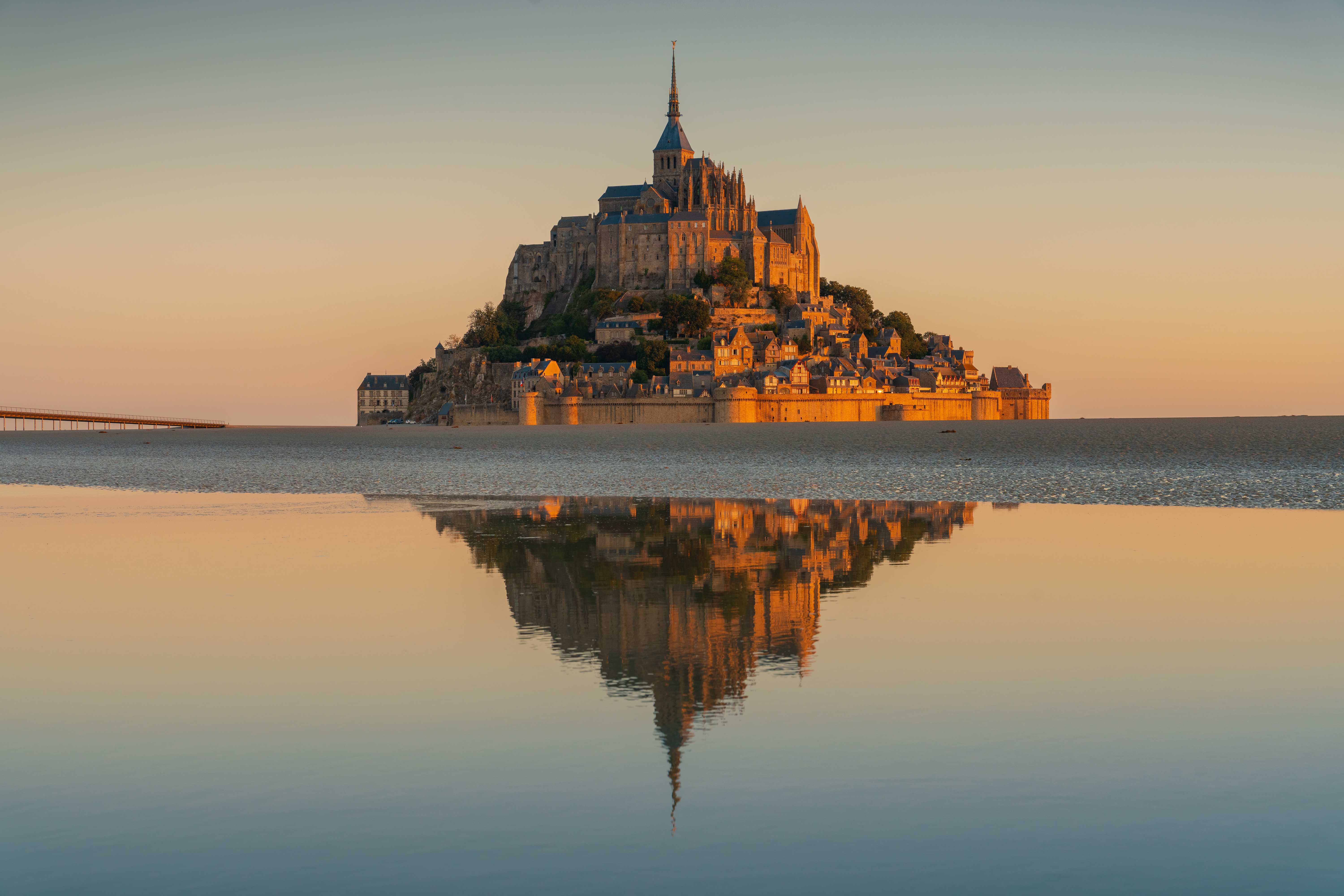
Mont Saint-Michel at sunrise — CC BY-SA, Wikimedia Commons
Geography: who owns the Couesnon?
It all starts with a river. The Couesnon, a modest waterway flowing into the bay of Mont Saint-Michel, long served as the natural border between Brittany and Normandy. The logic was simple: what lies to the west belongs to the Bretons, what lies to the east belongs to the Normans.
Mont Saint-Michel lies to the east of the Couesnon — on the Norman side. End of debate? Not quite. The Couesnon is a capricious river, known for shifting course over the centuries. Depending on the era and flooding, the Mount has found itself on either side of the liquid border.
🗺 Quick border guide
The current administrative border between Brittany and Normandy was fixed 4 kilometres west of the rock — placing the Mount unambiguously in Normandy on official maps. But official maps have never impressed the Bretons.
The Breton case: saints, bishops and Celtic memory
Before being Norman, the Mount was Breton. Or at least, it lay in a Celtic and Breton sphere of influence long before the arrival of the Vikings-turned-Normans.
Bishop Aubert of Avranches — a Breton bishop?
The legendary founding of the sanctuary dates to 708, with Bishop Aubert of Avranches's vision. Avranches was then within the cultural sphere of Breton influence. The argument is historically shaky but politically delicious.
The diocese of Dol-de-Bretagne
For part of the early Middle Ages, the bay fell under the ecclesiastical authority of the diocese of Dol-de-Bretagne, a quintessentially Breton town. For Bretons, the Mount's spiritual belonging to their territory is beyond doubt.
The saying — the ultimate rhetorical weapon
"The Couesnon, in its madness, put the Mount in Normandy.
— Breton popular saying
This saying is probably the most-used line in this debate. The lesser-known second part: "and will return it to the Bretons once it regains its reason."
Culture and identity
Residents of the bay, on both the Breton and Norman sides, share the same maritime culture, the same gastronomy, and the same fascination with the tides. For many Bretons, the Mount is a common good of the bay. If you're planning to visit, our practical guide to Mont Saint-Michel has everything you need to know.
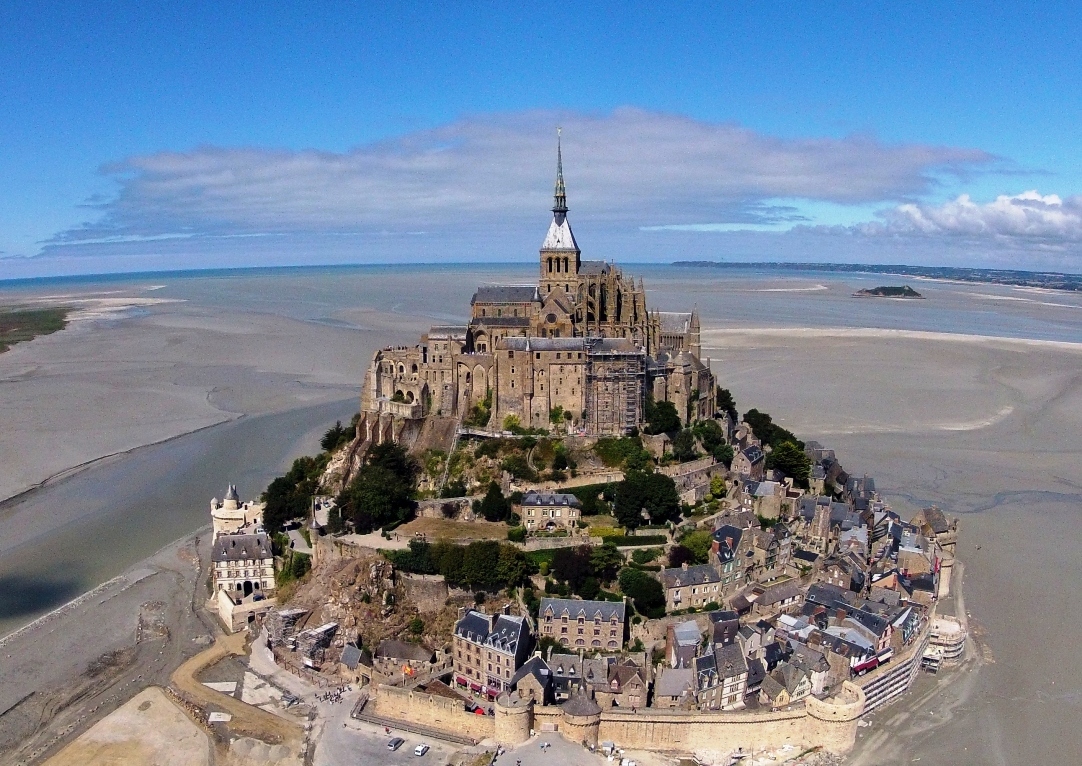
Aerial view of the abbey — CC BY-SA, Wikimedia Commons
The Norman case: dukes, charters and La Manche
The Normans have the law — literally — on their side. And several centuries of heavy political history to draw on.
Richard I and the Benedictine monks (966)
It was Duke of Normandy Richard I who, in 966, expelled the lax canons from the Mount and replaced them with Benedictine monks from the great Norman abbeys. Without Norman ducal power, no abbey — the argument is hard to counter.
The Order of Saint Michael (1469)
In 1469, King of France Charles VII founded the Order of Saint Michael, the kingdom's most prestigious chivalric order, with the Mount as its seat. A French royal recognition — not a Breton one.
1790: the Revolution settles it (officially)
When departments were created in 1790, Mont Saint-Michel was placed in the Manche department — Normandy, unambiguously. That decision has survived every political regime for 235 years. The law is the law.
The current official border
The border is set 4 kilometres west of the rock. Legally, geographically, administratively: Norman.
Breton arguments
- Celtic and Breton influence before the Vikings (6th–10th c.)
- Diocese of Dol-de-Bretagne: ecclesiastical belonging
- The Couesnon changed course: the border is artificial
- The saying: "will return it to the Bretons once it regains its reason"
- Shared culture of the bay on both sides
- Bishop Aubert: context of Breton influence in 708
Norman arguments
- Richard I (966): the real founding of the Benedictine abbey
- Norman funding of La Merveille (13th c.)
- Order of Saint Michael founded by Charles VII (1469)
- Manche department since 1790: a legal decision
- Official border 4 km west of the rock
- The impregnable Mount during the Hundred Years' War: a Norman symbol
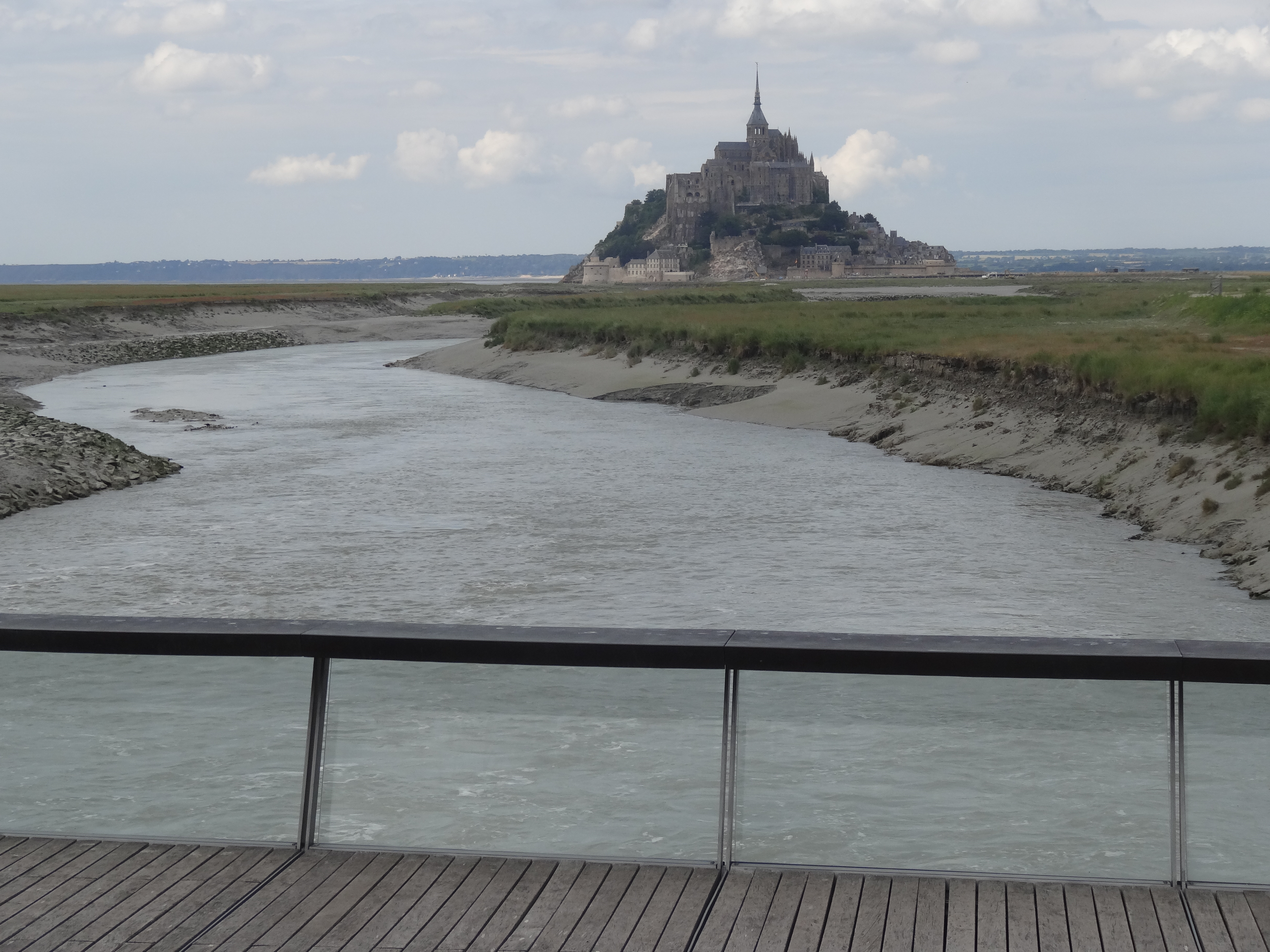
The Couesnon from the dam, with Mont Saint-Michel in the background — CC BY-SA, Wikimedia Commons
The Couesnon: the river that decided everything (and doesn't care)
The real star of this debate is a 97 km river that most people only know for its role in this quarrel. The Couesnon rises in the hills of Mayenne and flows into the bay of Mont Saint-Michel.
For centuries, this watercourse naturally meandered. According to geomorphological studies, the Couesnon occupied several distinct beds between the 8th and 12th centuries.
"The hypothesis of significant wandering by the Couesnon is perfectly coherent and plausible, given how much riverbeds could vary in the absence of any channelling.
— Stefan Maeder, archaeologist, University of Fribourg
It is precisely this wandering that fuels the Breton camp: if the river changed course, there's no proof the Mount was "naturally" to the east.
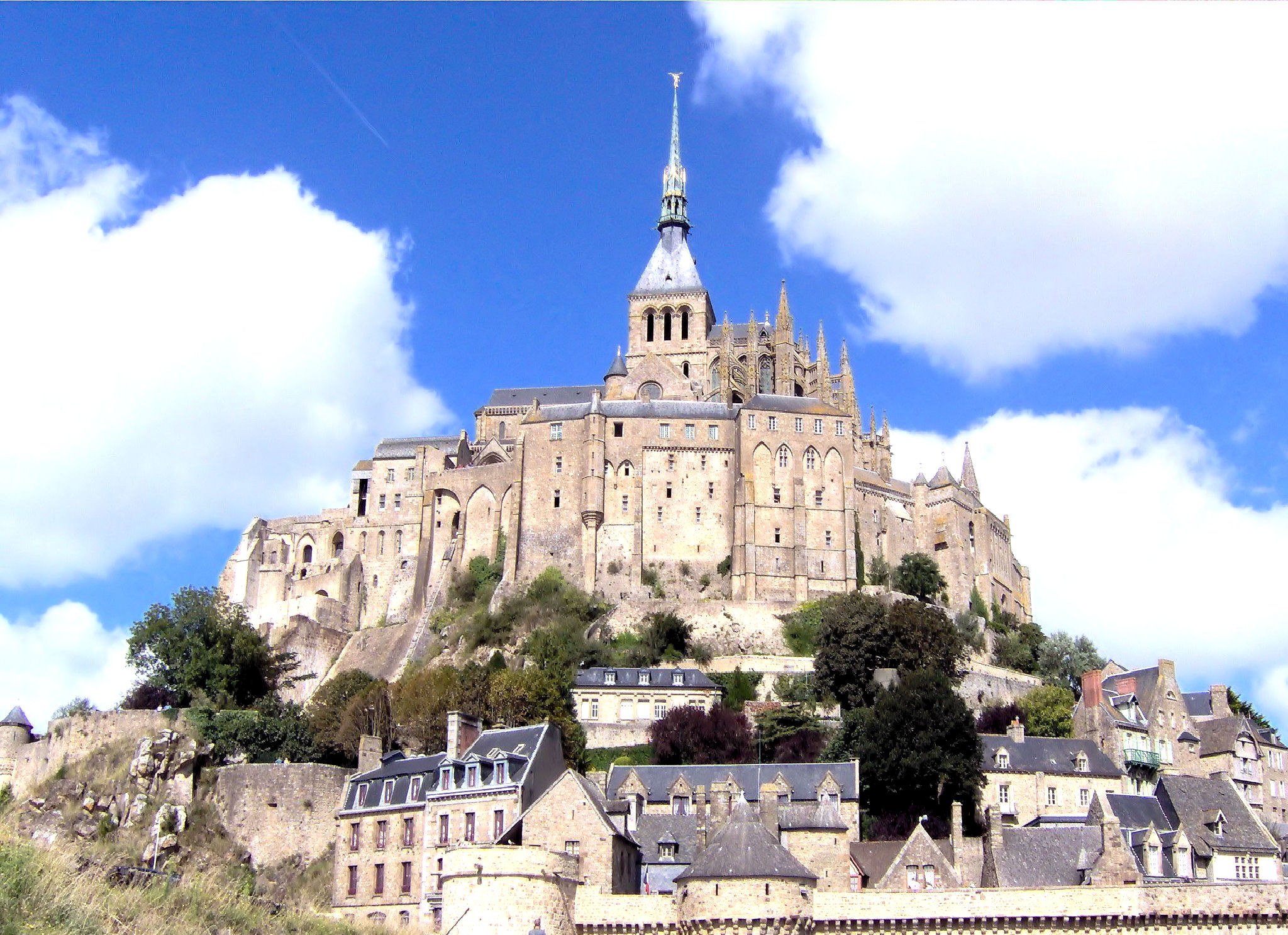
Panoramic view of Mont Saint-Michel — CC BY-SA, Wikimedia Commons
Verdict: officially Norman, culturally undecidable
Ask a lawyer or a Manche department official and the answer is clear: Mont Saint-Michel is Norman. Département 50, region of Normandy, full stop.
Ask someone from Dol-de-Bretagne or your Breton father-in-law on a Sunday evening after the kouign-amann, and the answer will be considerably more nuanced.
The historical truth: the Mount has been under successively Celtic, Frankish, Breton and Norman influence. It is the product of all these cultures.
What is certain: the question is more interesting than the answer. Which is why we made a game out of it.
Sources
- ↳ Stefan Maeder — geomorphological studies on the Couesnon riverbed, University of Fribourg
- ↳ Yves Bottineau-Fuchs, Le Mont Saint-Michel, Zodiaque, 2001
- ↳ Wikipedia fr — Le Mont-Saint-Michel (history and administrative geography section)
- ↳ Decrees of 1790 on the creation of departments — National Archives
- ↳ EPAMA/SMD — Reports on the restoration of maritime character (2006–2015)
So, which side are you on?
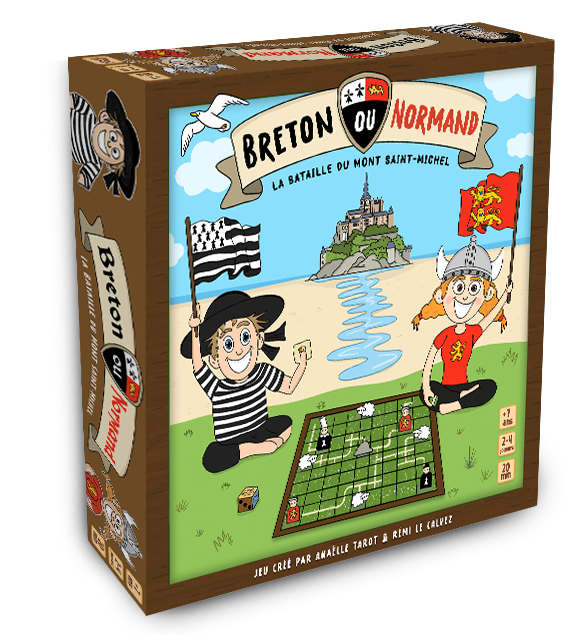
Breton or Norman — the board game
Choose your side, place your tiles and reach Mont Saint-Michel before everyone else. A game created by a Norman-Breton couple who ask the question every day.
Discover the board game →